
Your shopping cart is empty!
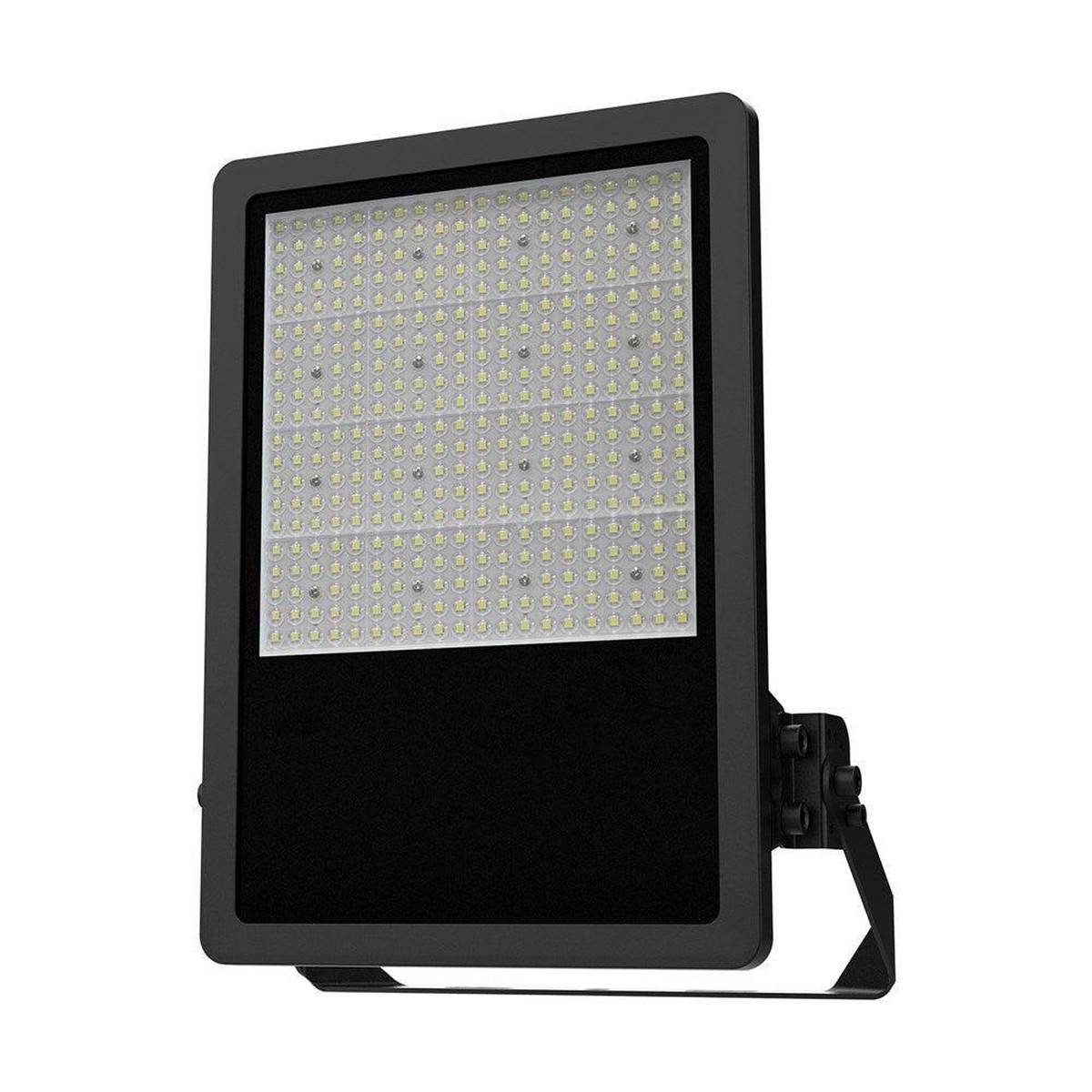
Domus FLARE Commercial LED Floodlight with Daylight Sensor
$115
$230
SKU: KO80391095938
Availability:
in Stock
The Domus FLARE is a commercial LED floodlight with a built-in daylightsensor three switchable wattage bands from 120W to 400W,eight beam optics, IP65, IK08, in a C5marine-grade powder-coated body. Forty…
The Domus FLARE is a commercial LED floodlight with a built-in daylightsensor three switchable wattage bands from 120W to 400W,eight beam optics, IP65, IK08, in a C5marine-grade powder-coated body.
Forty options, on three axes and each one is a real decision
| Axis | Choices |
|---|---|
| Wattage band | 120/160/200W 180/240/300W 240/320/400W |
| Colour | 4000K 5000K |
| Optic | 120 90 60 30 T2 T3 T4 Tennis |
- Each band is itself switchable across three wattages, so a single fitting coversthree outputs. Set it at installation nothing on the outside tells you afterwardswhich position it is in.
- The optic is the decision that matters most, and it is the one a dropdown makeslook trivial. See below.
The optics and what T2, T3, T4 and “Tennis” actually mean
| Optic | What it does | Use it for |
|---|---|---|
| 120 (standard) | Wide symmetric flood | General area lighting, yards, hardstands |
| 90 | Narrower flood | A defined area from a closer mounting |
| 60 | Medium throw | Reaching further down a yard |
| 30 | Narrow throw | A long throw to a distant target |
| T2 / T3 / T4 | Roadway distribution types asymmetric, throwing forward rather than around | Car parks, access roads, perimeter runs |
| Tennis | The datasheet’s 110 45 optic wide across, narrow along | Courts and rectangular playing surfaces |
- The T-types are the ones most people do not know they need. A symmetric flood on acar park wastes half its output behind the pole and throws light onto the neighbours; a Type II,III or IV optic pushes the light forward into the space, which is why roadway lighting usesthem.
- Tennis is not marketing. The datasheet lists a110 45 asymmetric optic, and a court is a rectangle lit from the sides you wantthe beam wide across the court and tight along the pole line, so it does not spill into the surrounds.
- Choosing the wrong optic cannot be corrected on site. Tell us the space,the mounting height and the pole positions and we will pick it with you this is the oneselection on this product worth a conversation.
Two things this listing records that most Domus products do not
- The application field is recorded as Outdoor and this is the only productof 843 in this catalogue where that field says anything but Indoor. On an IP65commercial floodlight, it is right.
- The wattage field lists all eight values 120, 160, 180, 200, 240, 300, 320and 400W. Of 22 Domus products whose variants are wattages, 18 record only thesmallest. This one does not.
- Worth saying because it shows the records CAN be right when someone fills them inproperly.
Specifying it
- Output: 120W 17,060lm 160W22,417lm 200W 27,267lm.
- The datasheet gives the SAME lumen figure for 4000K and 5000K at everywattage. Cooler settings normally give a little more. Flagged rather thanreconciled it does not change a selection, but if you are working to a lux calculation,ask us to confirm.
- IP65 and IK08. CRI 80.50,000hrs. Not dimmable.
- Surge protection 10kV more than double the BLAZE-PRO’s4.5kV, and the figure that matters on an exposed pole or a rural supply where a nearbystrike is the realistic failure mode.
- C5 marine-grade black powder coat the highest corrosivity category, on astandard product rather than a separate marine version. That is unusual: the BLAZE-PROcharges for C5 as a Marine variant.
- Clear glass lens not the frosted glass of the BLAZE-PRO, so lessglare softening and a crisper beam edge. On a court or a car park that is what you want; nearhousing it is worth considering.
- 2m flex and plug, and an adjustable mounting bracketincluded.
- Built-in daylight sensor dusk-to-dawn switching without a separatephotocell or contactor.
Where it works
- Sports courts and playing surfaces with the Tennis or T-type optics.
- Car parks, access roads and perimeters T2, T3 or T4.
- Industrial yards and hardstands 120 or 90.
- Coastal and industrial sites C5 coating as standard.
- Not where dimming is required, and not near housing without consideringthe clear lens.
Specifying it
Commercial LED floodlight with a built-in daylight sensor. Three switchable wattage bands:120/160/200W, 180/240/300W, 240/320/400W. 4000K or 5000K. Eight optics: 120standard, plus 90, 60, 30, T2, T3, T4 and Tennis (110 45). Up to 27,267lm at 200W.IP65, IK08. CRI 80. 10kV surge protection. C5 marine-grade black powder-coated aluminium, clearglass lens. 2m flex and plug, adjustable mounting bracket included. 50,000hrs. 240V AC. Not dimmable. The datasheet gives identical lumen figures for 4000K and 5000K at every wattage flagged, not reconciled. Warranty not recorded.
Supplied and supported by Lights For You.
Questions
Which beam optic should I choose?
It is the most consequential choice on this product and the one a dropdown makes look trivial. 120 is a wide symmetric flood for yards and hardstands; 90 and 60 narrow it for a defined area or more throw; 30 is a long throw to a distant target. T2, T3 and T4 are roadway distribution types asymmetric optics that push light forward rather than around, which is what car parks and access roads want. “Tennis” is the datasheet’s 110 45 optic: wide across a court and tight along the pole line so it does not spill into the surrounds. Tell us the space, the mounting height and the pole positions and we will pick it with you.
What are T2, T3 and T4?
Roadway distribution types asymmetric optics that throw the light forward into the space rather than symmetrically around the pole. They are the ones most people do not know they need: a symmetric flood on a car park wastes half its output behind the pole and spills onto neighbours, where a Type II, III or IV optic puts it where the cars and the traffic are. The number describes how wide the forward throw is. If you are lighting anything linear an access road, a perimeter, a row of bays ask us which type suits.
Is “Tennis” a real optic or a marketing name?
A real one. The datasheet lists a 110 45 asymmetric optic, and that is what the Tennis option is. A court is a rectangle lit from the sides, so you want the beam wide across the court and tight along the pole line a symmetric flood would waste output behind the poles and throw light into the surrounding property. It is the right optic for any rectangular playing surface, not just tennis.
How do I set the wattage?
Each band is switchable across three wattages so the 120/160/200W fitting is one product covering three outputs, set at installation. Choose the band from the dropdown first, then set the switch. Nothing on the outside tells you afterwards which position it is in, so set it deliberately and note it: a floodlight quietly running at 120W where 200W was specified is an invisible shortfall.
Why is the surge protection worth paying attention to?
10kV is more than double the 4.5kV on the BLAZE-PRO floodlights in this catalogue, and on an exposed pole or a rural supply a nearby lightning strike is the realistic failure mode rather than the LED wearing out. On a sports field or a perimeter run where the fittings sit on tall poles in open ground, that difference is the one most likely to decide whether you replace fittings after a storm.
How does it compare with the BLAZE-PRO floodlights?
Three real differences. The FLARE carries a C5 marine-grade coating as standard, where the BLAZE-PRO charges for C5 as a separate Marine variant. Its surge protection is 10kV against 4.5kV. And it has eight beam optics including roadway and court types, where the BLAZE-PRO is 120 only. The BLAZE-PRO’s frosted glass softens glare more than the FLARE’s clear lens, which matters near housing. In short: FLARE for commercial and sporting, BLAZE-PRO for general yards and walls.
Why do 4000K and 5000K give the same lumen figures?
They should not, and we are flagging it rather than explaining it away the datasheet gives identical figures at every wattage (17,060lm, 22,417lm, 27,267lm) for both colour temperatures, where cooler settings normally give a little more. The same anomaly appears on the BLAZE-PRO Marine sheet in this catalogue. It does not change a selection, since the difference would be a few per cent either way, but if you are working to a lux calculation ask us to confirm with Domus first.
Only logged in customers who have purchased this product may leave a review.
Shipping policy for our store
We offer fast and reliable shipping worldwide. All orders are carefully packaged and shipped within 1–3 business days after payment confirmation.
- Fast shipping within 1-3 business days
- Free shipping on orders over $40
- 30 days money back guarantee
- 24/7 online customer support
- Secure packaging & safe delivery
Standard shipping, expedited shipping and express delivery options are available at checkout. Delivery time depends on your destination country and local logistics.
Related Products
 -20%


