Your shopping cart is empty!

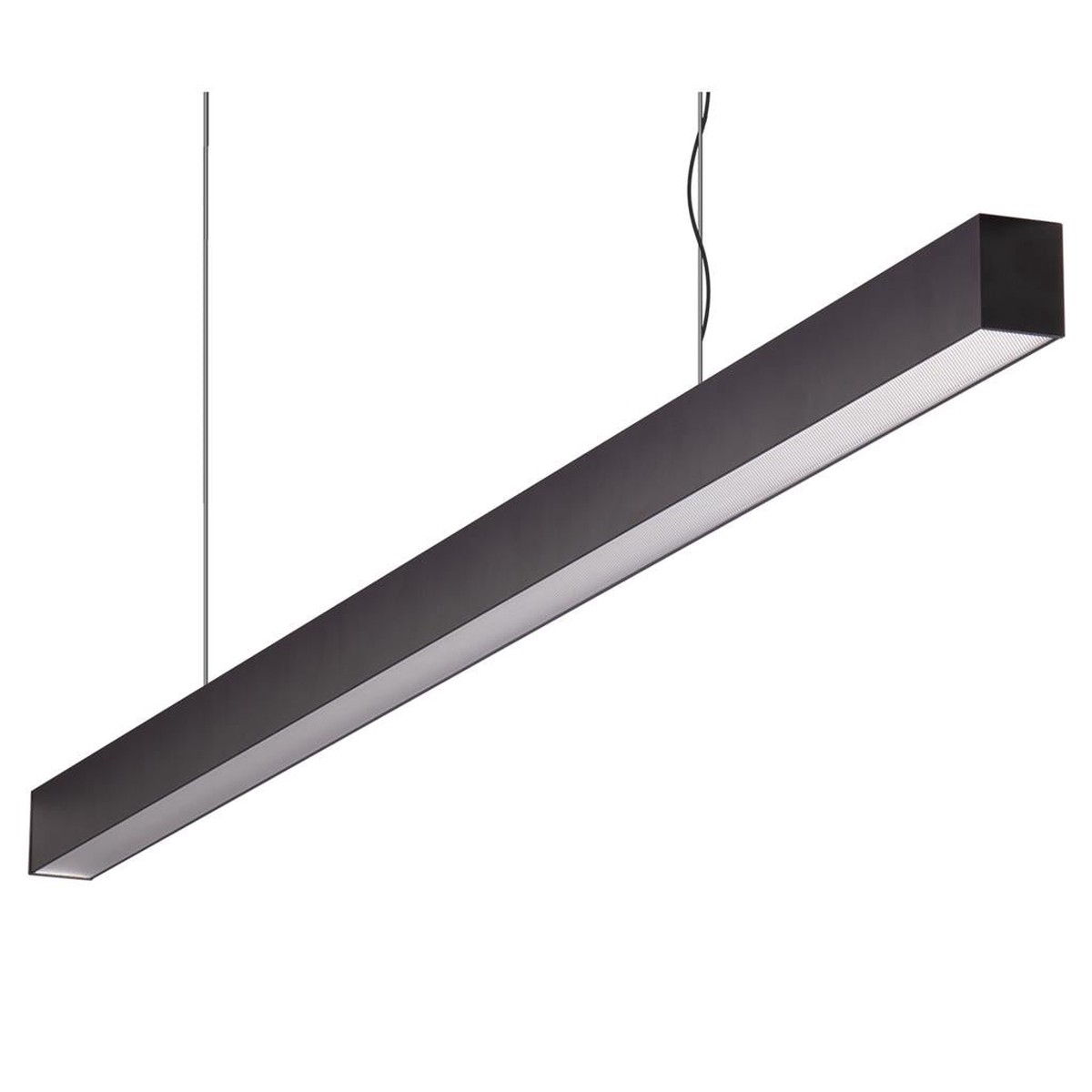
Domus Maxi 50 1.2m Long Pendant Aluminium Dimmable 4k
$128.495
$256.99
SKU: KO80391096010
Availability:
in Stock
The Domus Maxi 50 is a 1.2m suspended LED linear pendant 24W, 2400lm, 4000K atCRI90, dimmable, in an aluminium body, in six finishes includingHONEYCOMB. Made to order, and no lead…
The Domus Maxi 50 is a 1.2m suspended LED linear pendant 24W, 2400lm, 4000K atCRI90, dimmable, in an aluminium body, in six finishes includingHONEYCOMB.
Made to order, and no lead time is published
Domus asks you to call and confirm it. We will.
The honeycomb what it does, and what it takes
- A honeycomb is a cellular baffle in front of the light source. Each cell iseffectively a short tube light leaving straight down passes through, and lightleaving at a steep angle hits a cell wall and is absorbed.
- Above a cut-off angle you cannot see the source. Stand to one side andthe fitting reads as dark; stand under it and it is lit.
- That is a different mechanism from every other finish here. PrismaticREDIRECTS shallow-angle light downward and frosted SCATTERS it both still emitit. A honeycomb REMOVES it.
- Which is why it belongs over screens. The reflection you see in a monitoris shallow-angle light from a fitting behind you and a honeycomb is the onlyoption here that stops it rather than softening it.
And what it costs now measurable against a real figure
- The published output for this fitting is 2400lm, and Domuspublishes one figure for the listing rather than one per finish.
- A baffle that absorbs steep-angle output must absorb a share of that total so the honeycomb version delivers less than 2400lm, and by how much is notstated.
- That is now a bounded question rather than an open one. We know thestarting figure; what we need from Domus is the honeycomb’s transmission. Ask us and wewill get it.
- It also narrows the useful spread, so a honeycomb run needs closerspacing than a frosted one to light the same area evenly. Plan for more fittings, notthe same number.
- And do not plan spacing from the recorded 120 beam it is recordedidentically for all six finishes, which cannot be true across a cellular baffle and a clear lens. It is a range default, not a per-finish measurement.
The published specification
| Specification | Value |
|---|---|
| Light output | 2400lm 2000lm/m, 100lm/W |
| Colour rendering | CRI90 at 4000K |
| Power / length | 24W at 240V 1200mm |
| Beam | 120 recorded a range default across all six finishes |
| IP rating | IP20 dry interior only |
| Suspension | 3m drop supplied |
| Light engine | PLEX-COB-20W strip, integral dimmable driver |
| Dimming | DALI and emergency on request |
| Warranty | 3 years, replacement |
| Honeycomb transmission lifespan | Not published |
Aluminium at 4000 K, 1.2 m where a honeycomb earns its place
- A single desk or a 1.8m workstation exactly the positionwhere a screen sits directly under the fitting.
- 4000K is the working neutral and the more efficient option 2400lm against the 3000K version’s 2160lm.
- Aluminium belongs against timber, concrete or exposed structure; the white listingrecedes into plasterboard.
- A honeycomb is a visible texture and reads technical right in an office ora studio, wrong over a dining table.
Where it works
- Over screens the honeycomb is the reason to choose this range.
- Single desks and 1.8m workstations.
- Studios and drawing offices at 4000K.
- Timber and concrete soffits.
- Not over dining with a honeycomb it reads technical.
Specifying it
1.2m suspended LED linear pendant. 2400lm, 24W (100lm/W), 4000K,CRI90. IP20. 1200mm. 3m drop. PLEX-COB-20W strip, integral dimmable driver, DALI and emergencyon request. Anodised aluminium body. Prismatic, frosted, honeycomb, opal, black or clear finish. 3-yearreplacement warranty. Order code MAXI-50-1.2M-A-4K. A HONEYCOMB IS A CELLULAR BAFFLE straight-down light passes, steep-angle light is absorbed, soit REMOVES the component that reflects in a monitor rather than softening it. It must therefore deliverless than the listing’s published 2400lm, and by how much is not stated a bounded question nowthat the starting figure exists. Do not plan spacing from the recorded 120: it is a range defaultapplied to all six finishes.
Supplied and supported by Lights For You.
Questions
What does a honeycomb finish do?
It is a cellular baffle in front of the light source, and each cell is effectively a short tube: light leaving straight down passes through, and light leaving at a steep angle hits a cell wall and is absorbed. Above a cut-off angle you cannot see the source stand to one side and the fitting reads as dark, stand under it and it is lit.
How is that different from prismatic or frosted?
Prismatic redirects shallow-angle light downward and frosted scatters it, but both still emit it. A honeycomb removes it. That is why it belongs over screens: the reflection you see in a monitor is shallow-angle light from a fitting behind you, and a honeycomb is the only option here that stops it rather than softening it.
What does the honeycomb cost me in light?
Less than the listing’s published 2400 lumens and by how much is not stated. Domus publishes one output figure for the listing rather than one per finish, so we know the starting point but not the honeycomb’s transmission. That makes it a bounded question rather than an open one: ask us and we will get the transmission figure from Domus.
Will I need more fittings with a honeycomb?
Probably. Removing steep-angle output narrows the useful spread as well as reducing the total, so a honeycomb run needs closer spacing than a frosted one to light the same area evenly. Plan for more fittings rather than the same number, and tell us the space so we can work it out properly once we have the transmission figure.
Can I plan spacing from the 120 degree beam angle?
No. It is recorded identically for all six finishes on every Maxi 50 listing, which cannot be true across a set that includes a cellular baffle and a clear lens a honeycomb narrows the emission by design and a clear lens does not diffuse at all. It is a range default rather than a per-finish measurement. Ask us for the real figure before setting out a run.
Why aluminium and 4000K?
4000K is the working neutral and the more efficient of the two 2400 lumens against the 3000K version’s 2160 for the same 24W. Aluminium belongs against timber, concrete or exposed structure; against white plasterboard it reads as a grey line and the white listing is the one that recedes.
Where should I not use a honeycomb?
Over dining or in hospitality. It is a visible texture and reads technical right in an office or a studio, wrong over a table people eat at. There, opal or frosted give a cleaner result and the glare control is not what the room needs.
Only logged in customers who have purchased this product may leave a review.
Shipping policy for our store
We offer fast and reliable shipping worldwide. All orders are carefully packaged and shipped within 1–3 business days after payment confirmation.
- Fast shipping within 1-3 business days
- Free shipping on orders over $40
- 30 days money back guarantee
- 24/7 online customer support
- Secure packaging & safe delivery
Standard shipping, expedited shipping and express delivery options are available at checkout. Delivery time depends on your destination country and local logistics.
Related Products
 -54%
 -71%