Your shopping cart is empty!
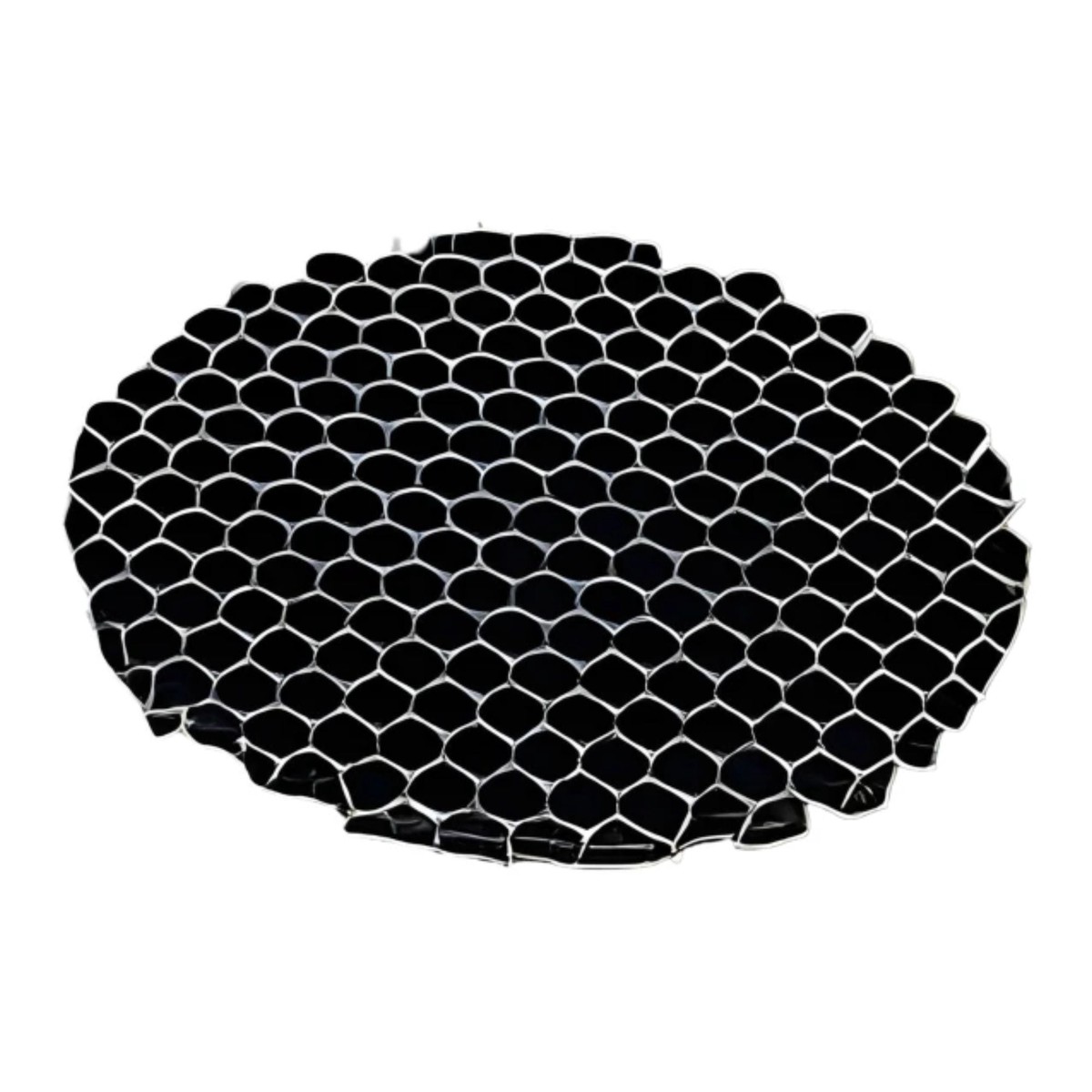
Domus THOR-PRO-15 Lens
$4
$5
SKU: KO80391096108
Availability:
in Stock
The Domus THOR-PRO-15 Lens is a drop-in optical accessory forthe 15W THOR-PRO head available as a honeycomb louvre or inpurple, red, blue, green oryellow. Two different jobs under one product…
The Domus THOR-PRO-15 Lens is a drop-in optical accessory forthe 15W THOR-PRO head available as a honeycomb louvre or inpurple, red, blue, green oryellow.
Two different jobs under one product
- THE HONEYCOMB IS NOT A COLOURED LENS AND DOES A COMPLETELY DIFFERENT JOB. It is an anti-glare louvre a grid of small cells that blocks light leaving at wideangles while letting the central beam through.
- WHAT THAT ACHIEVES: the fitting stops being visible as a bright source from across theroom. You see the lit object and not the light. In a gallery, arestaurant or any space where people look across the room at seated height, that is the difference betweencomfortable and glary.
- IT COSTS OUTPUT. A honeycomb blocks light by design, so expect ameaningful reduction the figure is not published, and we would not estimate it. Ask us if you are working to a lux target.
- THE COLOURED LENSES ARE EFFECT LIGHTING a saturated wash for adisplay, a bar, an event or a seasonal installation.
Coloured lenses cost far more light than people expect
- A coloured lens works by absorbing every wavelength except the one itpasses. It does not convert white light to colour; it throws most of itaway.
- SO A DEEP BLUE OR RED LENS ON A WHITE LED CAN LOSE THE LARGE MAJORITY OF ITSOUTPUT and the loss is worst for exactly the colours people most often want,because a white LED emits comparatively little deep red or deep blue to begin with.
- THE ALTERNATIVE WORTH KNOWING ABOUT: a dedicated coloured LED strip or an RGB fittingproduces its colour at the source rather than filtering it. For a permanent colouredfeature that is far more efficient. A lens is the right answer for a temporary oroccasional effect on fittings that are already installed.
- Green and yellow lose least, red and blue lose most which is thesame physiology that makes green LEDs measure brightest.
Why a drop-in accessory beats a different fitting
Because it is reversible and cheap. A shop that wants red for apromotional fortnight fits lenses, then removes them. A restaurant that finds one tablesuffers glare fits a honeycomb to two heads rather than remounting them. THAT IS THE ARGUMENT FOR A SYSTEM WITH ACCESSORIES AT ALL: the decisions that are hardest toget right on a drawing become adjustable after the space is occupied and someone has actually stood init.
What is not published, and it is most of it
- No datasheet is attached. No transmission figures, no output loss foreither the honeycomb or any colour, no material, no cut-off angle for the louvre.
- FOR A HONEYCOMB THE CUT-OFF ANGLE IS THE SPECIFICATION it isthe angle beyond which the source is no longer visible, and it is what determines whether the louvre solvesthe glare problem you have. It is not published.
- WE HAVE NOT ESTIMATED ANY OF IT. Tell us the problem the viewingposition, the seated eye height, the throw and we will get the figures from Domus before youorder.
- Its record publishes bulb_type = Built-in LED, which a lens does nothave. Across the ten optical accessories in this catalogue, ten publish at least oneelectrical field.
What is published
| Specification | Value |
|---|---|
| Options | Honeycomb louvre purple red blue green yellow |
| Two different jobs | Glare control vs colour effect |
| Honeycomb does | Blocks wide-angle light you see the object, not the source |
| And costs | Output figure not published, not estimated |
| Coloured lenses work by | ABSORBING everything else a large loss |
| Worst on | Deep red and blue least on green and yellow |
| For a permanent colour feature | A coloured LED source is far more efficient |
| Cut-off angle | Not published the honeycomb’s key figure |
| Datasheet / material | Neither published |
| Its record publishes | bulb_type a lens has no LED |
Where it works
- Galleries and restaurants the honeycomb, for seated sightlines.
- Promotional and seasonal displays colour, reversibly.
- Fixing glare after occupation two heads, not a remount.
- Not for a permanent colour feature use a coloured source.
- Not to a lux target without asking us for the loss figures.
Specifying it
Drop-in optical accessory for THOR-PRO-15 heads. Honeycomb anti-glare louvre, or purple, red,blue, green or yellow lens. THE HONEYCOMB IS NOT A COLOURED LENS AND DOES A COMPLETELY DIFFERENT JOB it is an anti-glarelouvre that blocks light leaving at wide angles, so you see the lit object rather than the source. In agallery or restaurant, where people look across the room at seated height, that is the difference betweencomfortable and glary. COLOURED LENSES COST FAR MORE LIGHT THAN PEOPLE EXPECT, because they work byabsorbing everything except the wavelength they pass worst for the deep reds and blues most often wanted. NO TRANSMISSION FIGURES ARE PUBLISHED AND WE HAVE NOT ESTIMATED THEM.
Supplied and supported by Lights For You.
Questions
Is the honeycomb a coloured lens?
No it does a completely different job. It is an anti-glare louvre: a grid of small cells that blocks light leaving at wide angles while letting the central beam through. The fitting stops being visible as a bright source from across the room, so you see the lit object and not the light.
When does that matter?
In a gallery, a restaurant, or any space where people look across the room at seated height. A track head aimed at a wall is also aimed, from some seats, straight at a diner. A honeycomb is the difference between comfortable and glary, and it can be fitted to two heads after the space is occupied rather than remounting them.
Does the honeycomb cost light?
Yes, meaningfully it blocks light by design. The figure is not published and we have not estimated it. If you are working to a lux target, ask us and we will get it from Domus before you order.
How much light does a coloured lens lose?
More than people expect. A coloured lens works by absorbing every wavelength except the one it passes it does not convert white light to colour, it throws most of it away. The loss is worst for deep red and blue, which are exactly the colours most often wanted, because a white LED emits comparatively little of either to begin with. Green and yellow lose least.
Is there a better way to get colour?
For anything permanent, yes. A dedicated coloured LED strip or an RGB fitting produces its colour at the source rather than filtering it, which is far more efficient. A lens is the right answer for a temporary or occasional effect on fittings that are already installed a promotional fortnight, a seasonal display, an event.
What is the key specification for a honeycomb?
The cut-off angle the angle beyond which the source is no longer visible. It is what determines whether the louvre actually solves the glare problem you have, and it is not published. Tell us the viewing position, the seated eye height and the throw, and we will get it from Domus.
Why does the listing show a bulb type?
It should not a lens has no LED. Its record publishes bulb_type = Built-in LED, and across the ten optical accessories in this catalogue all ten publish at least one electrical field. It is the same template default found on brackets, mounting plates and panel frames.
Only logged in customers who have purchased this product may leave a review.
Shipping policy for our store
We offer fast and reliable shipping worldwide. All orders are carefully packaged and shipped within 1–3 business days after payment confirmation.
- Fast shipping within 1-3 business days
- Free shipping on orders over $40
- 30 days money back guarantee
- 24/7 online customer support
- Secure packaging & safe delivery
Standard shipping, expedited shipping and express delivery options are available at checkout. Delivery time depends on your destination country and local logistics.