Your shopping cart is empty!
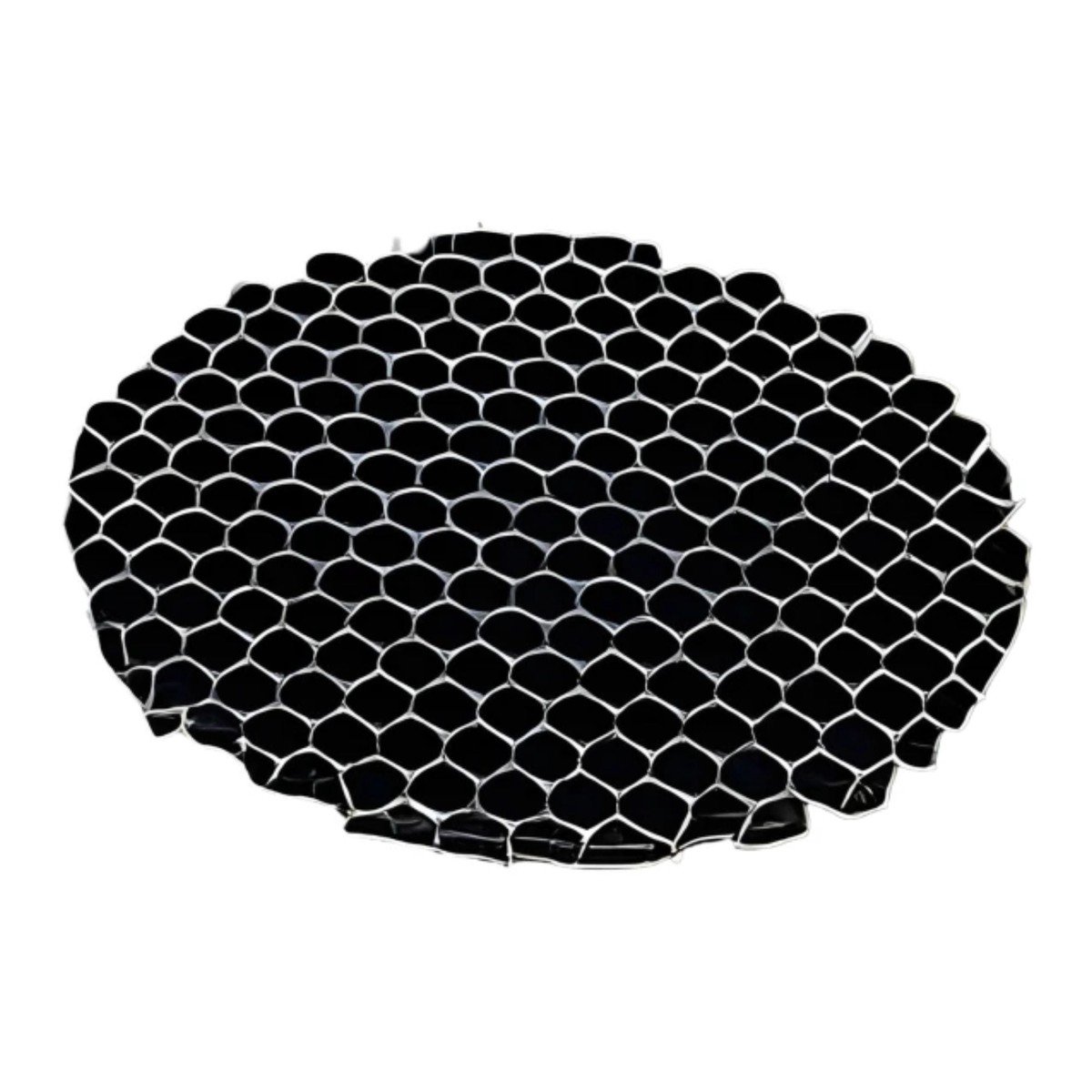
Domus THOR-PRO-23 Lens
$4
$5
SKU: KO80391096104
Availability:
in Stock
The Domus THOR-PRO-23 Lens is a drop-in optical accessory forthe 23W THOR-PRO head available as a honeycomb louvre or inpurple, red, blue, green oryellow. At 23 W the honeycomb stops…
The Domus THOR-PRO-23 Lens is a drop-in optical accessory forthe 23W THOR-PRO head available as a honeycomb louvre or inpurple, red, blue, green oryellow.
At 23 W the honeycomb stops being optional
- The honeycomb is an anti-glare louvre, not a coloured lens. It is a gridof cells that blocks light leaving at wide angles while passing the central beam, so the fitting stopsbeing visible as a bright source from across the room.
- AT 2,100 LUMENS FROM A 62 mm APERTURE, THE SOURCE IS GENUINELY UNCOMFORTABLE TO LOOKAT. That is a small opening putting out a lot of light, and anyone whose sightlinecrosses it will notice. On a 15W head a honeycomb is a refinement; on a 23Whead in a space with seating, it is closer to a requirement.
- THE POSITIONS THAT NEED IT: restaurants where diners look across the room, galleries wherepeople stand and look up, receptions with low seating, and any track run aimed along a sightline ratherthan down.
- IT COSTS OUTPUT and the figure is not published. We have not estimatedit. Ask us before working to a lux target.
Work up the glare ladder, not down it
| Step | What it does | Output cost |
|---|---|---|
| 1. Black baffle | Darkens the aperture | Small |
| 2. Re-aim | Moves the source out of the sightline | None |
| 3. Honeycomb | Cuts wide-angle light | Meaningful |
- EACH STEP COSTS MORE LIGHT THAN THE ONE BEFORE, so working up the list preserves thescheme. A great many glare complaints are solved by a black baffle and a small change ofaim, and the honeycomb is what you reach for when those are not enough.
- ON A 23W HEAD, DOING ALL THREE IS OFTEN CORRECT.
Coloured lenses at 23 W more light to lose
A coloured lens works by absorbing every wavelength except the one it passes. It does not convert white light to colour; it discards most of it. AT 23 W THAT IS A LARGER ABSOLUTE LOSS THAN ON A SMALLER HEAD, WHICH CUTS BOTHWAYS: more light to start with means a deep red or blue is actually usable where a15W head filtered to red might be too dim but you are paying 23W toproduce the output of something far smaller. For a permanent coloured feature, acoloured LED source is far more efficient; a lens is for temporary or occasional effect on fittings alreadyinstalled. Green and yellow lose least; red and blue lose most.
Nothing is published about the lenses themselves
No datasheet is attached. No transmission figures, no output loss for thehoneycomb or any colour, no material, and no cut-off angle for the louvre which for a honeycomb isthe specification that decides whether it solves your problem. WE HAVE NOT ESTIMATED ANY OF IT. Tell us the viewing position, the seated eyeheight and the throw and we will get the figures from Domus. Its record publishesbulb_type = Built-in LED; all ten optical accessories in this catalogue carry anelectrical field.
What is published
| Specification | Value |
|---|---|
| Options | Honeycomb louvre purple red blue green yellow |
| At 23W the honeycomb | Stops being optional in a seated space |
| Why | 2,100lm from a 62mm aperture a small, very bright opening |
| Glare ladder | Baffle aim honeycomb |
| At 23W | Doing all three is often correct |
| Coloured lenses | Absorb rather than convert a large loss |
| Cuts both ways at 23W | Usable deep colour at a high energy price |
| Cut-off angle | Not published the honeycomb’s key figure |
| Transmission / material | Neither published and not estimated |
| Its record publishes | bulb_type a lens has no LED |
Where it works
- Restaurants and galleries with 23W heads honeycomb.
- Track runs aimed along a sightline.
- Temporary colour on installed fittings.
- Not as the first glare fix baffle and aim come first.
- Not for permanent colour use a coloured source.
Specifying it
Drop-in optical accessory for THOR-PRO-23 heads. Honeycomb anti-glare louvre, or purple, red,blue, green or yellow lens. AT 23 W THE HONEYCOMB STOPS BEING OPTIONAL IN A SPACE WITH SEATING. 2,100 lumens from a 62 mmaperture is a small opening putting out a lot of light, and anyone whose sightline crosses it will notice on a 15 W head a honeycomb is a refinement, here it is closer to a requirement. BUT WORK UP THE GLARELADDER, NOT DOWN IT: black baffle first (small light cost), then re-aim (none), then honeycomb(meaningful). NO TRANSMISSION OR CUT-OFF FIGURES ARE PUBLISHED and we have not estimatedthem.
Supplied and supported by Lights For You.
Questions
Is the honeycomb necessary at 23W?
In a space with seating, close to it. 2,100 lumens from a 62mm aperture is a small opening putting out a lot of light, and anyone whose sightline crosses it will notice. On a 15W head a honeycomb is a refinement; here it is closer to a requirement restaurants where diners look across the room, galleries where people stand and look up, receptions with low seating, and any track run aimed along a sightline rather than down.
Should I fit one to every head?
Not necessarily, and not first. Work up the glare ladder rather than down it: a black baffle darkens the aperture for a small light cost, re-aiming moves the source out of the sightline for none, and the honeycomb cuts wide-angle light for a meaningful cost. A great many glare complaints are solved by the first two. On a 23W head, doing all three is often correct.
How much light does the honeycomb cost?
Not published, and we have not estimated it. It blocks light by design, so the reduction is real. If you are working to a lux target, ask us and we will get the figure from Domus before you order.
What is the honeycomb’s key specification?
The cut-off angle the angle beyond which the source is no longer visible. It is what determines whether the louvre actually solves the glare problem you have, and it is not published anywhere. Tell us the viewing position, the seated eye height and the throw and we will get it.
How much light does a coloured lens lose?
A great deal. A coloured lens absorbs every wavelength except the one it passes it does not convert white light to colour, it discards most of it. Green and yellow lose least; red and blue lose most, because a white LED emits comparatively little of either to begin with.
Does 23W help with coloured lenses?
It cuts both ways. More light to start with means a deep red or blue is actually usable where a 15W head filtered to red might be too dim but you are paying 23W to produce the output of something far smaller. For a permanent coloured feature a coloured LED source is far more efficient; a lens is for temporary or occasional effect on fittings already installed.
Why does the listing show a bulb type?
It should not a lens has no LED. All ten optical accessories in this catalogue publish at least one electrical field, which is the same template default found on brackets, mounting plates and panel frames. We have not repeated it here.
Only logged in customers who have purchased this product may leave a review.
Shipping policy for our store
We offer fast and reliable shipping worldwide. All orders are carefully packaged and shipped within 1–3 business days after payment confirmation.
- Fast shipping within 1-3 business days
- Free shipping on orders over $40
- 30 days money back guarantee
- 24/7 online customer support
- Secure packaging & safe delivery
Standard shipping, expedited shipping and express delivery options are available at checkout. Delivery time depends on your destination country and local logistics.