Your shopping cart is empty!
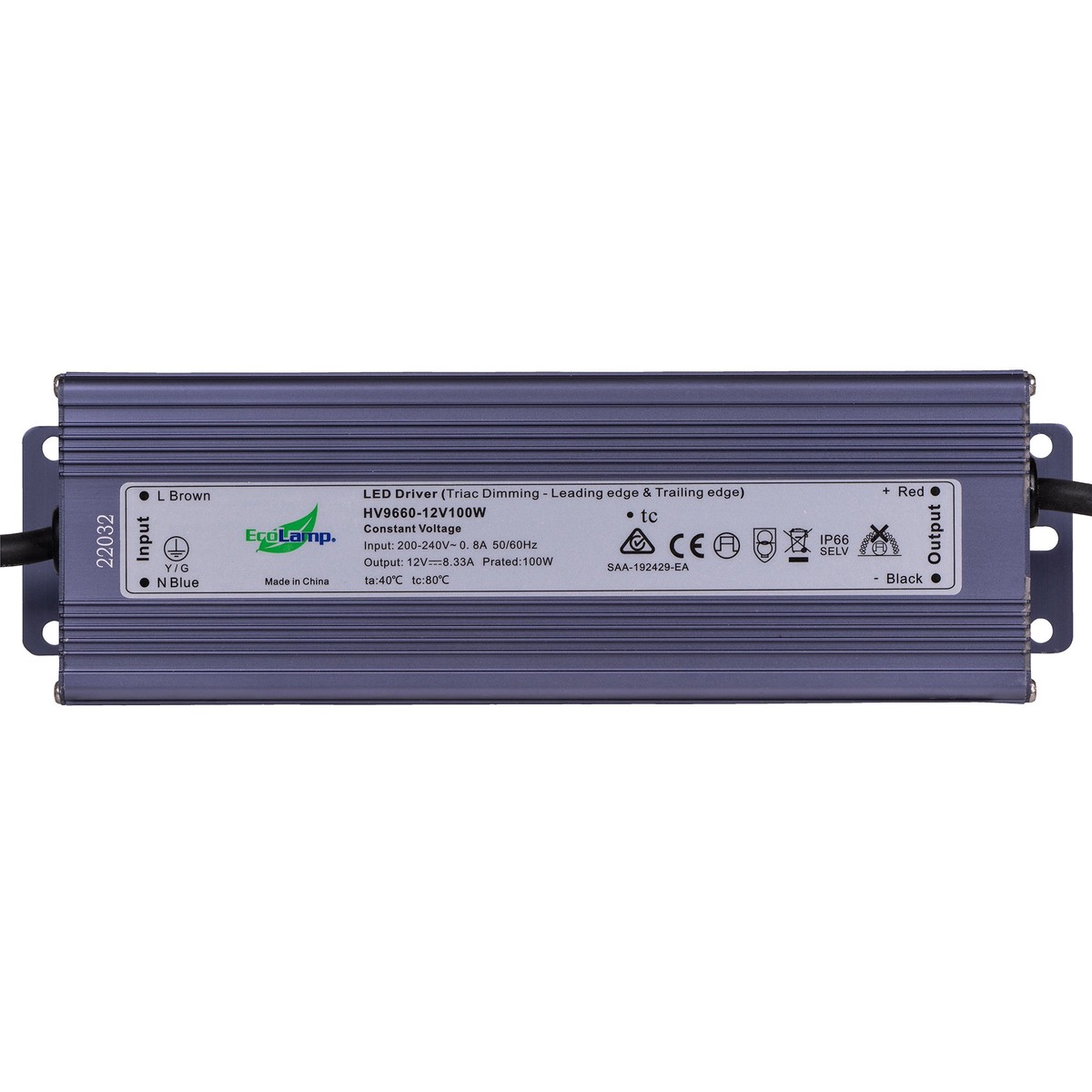
100W Weatherproof Dimmable
$104.495
$208.99
SKU: KO80391101592
Availability:
in Stock
100W 12V or 24V weatherproof LED driverThis is a mid-sized LED driver - the power supply that sits between mains and low-voltage lighting. This is the size most domestic jobs…
100W 12V or 24V weatherproof LED driver
This is a mid-sized LED driver – the power supply that sits between mains and low-voltage lighting. This is the size most domestic jobs land on: a room of strip lighting, a garden bed of spike lights, or a run of step lights down a staircase. It takes mains power and converts it down to 12V or 24V DC.
It is rated to carry up to 100W of LED load. That figure is a ceiling, not a target – which matters more than it sounds.
At this size the driver stops being an afterthought and starts shaping the installation. It has to live somewhere reachable, it has to be allowed for in the cabling, and it is the component most likely to want attention before the fittings do.
Working out what size you need
Add up the wattage of every fitting on the run, then choose a driver rated comfortably above that total rather than one that just covers it. Running a supply at its limit is the most common cause of early failure: it runs hotter, and heat is what kills a power supply.
Spare capacity is also what lets a scheme grow. Gardens and rooms gain fittings over time, and a driver chosen with headroom absorbs that; one chosen exactly does not.
This driver is made in both output voltages, and they are not interchangeable. Check which one your fittings need before ordering – the two look identical on the shelf and behave very differently on the run.
Where it can be installed
Outdoors, the question is less whether it survives and more whether you can get back to it. A driver buried at the far end of a garden bed is protected and effectively unreachable; one at the start of the run, off the ground and clear of planting, is both.
Weatherproof is not the same as submersible. Keep it out of standing water and off ground that floods, and mount it so water runs off rather than pooling on it.
Dimming
This driver is dimmable. Dimming a low-voltage LED system happens at the driver rather than at the fitting, so check that your dimmer or control system matches the driver’s dimming method before ordering.
Installation
This is a Class I driver, which means it requires an earth connection. That is not optional, and it is part of what makes the installation compliant.
The mains side of a driver is licensed electrical work and must be wired by an electrician. Decide where the unit will live before the lights go in: it needs to stay reachable, because it is the part most likely to need attention years down the track.
Give it air. A driver at this capacity sheds real heat, and one packed into insulation or sealed into a tight box will run hot and shorten its own life whatever its rating says.
Frequently asked questions
What does an LED driver actually do?
It converts mains down to the low-voltage DC that LED fittings run on, and holds that output steady as the load changes. Low-voltage lighting cannot be connected to mains directly.
How much lighting will 100W run?
Add up the wattage of the fittings you want to power – the total needs to stay under 100W, with room to spare. The wattage of each fitting is listed on its own specification.
Does the output voltage have to match my fittings?
Yes. This driver outputs 12V or 24V DC and the fittings must be rated for the same. Mixing them either leaves the lights dead or destroys them.
Can it be installed outside?
Yes – it is rated IP66 for outdoor use. Keep it clear of standing water and mount it so water drains off rather than sitting on it.
Does it need an earth?
Yes. It is a Class I driver, so an earth connection is required.
Do I need an electrician?
Yes, for the mains side. Connecting a driver to mains is licensed electrical work in Australia.
What warranty does it carry?
3 Years*
Only logged in customers who have purchased this product may leave a review.
Shipping policy for our store
We offer fast and reliable shipping worldwide. All orders are carefully packaged and shipped within 1–3 business days after payment confirmation.
- Fast shipping within 1-3 business days
- Free shipping on orders over $40
- 30 days money back guarantee
- 24/7 online customer support
- Secure packaging & safe delivery
Standard shipping, expedited shipping and express delivery options are available at checkout. Delivery time depends on your destination country and local logistics.