
Your shopping cart is empty!

Cell-9-5Cct-T75 – 9W Colour Switchable T75 Tiltable Led Downlight 240V – Quinto
$38.5
$77
SKU: KO80391101081
Availability:
in Stock
The Domus CELL-9-5CCT-T75 is a 9W tiltable LED downlight withfive switchable colour temperatures, a 60 beam and an90mm fascia. Cutout 7275mm, and only71mm deep. It is the shallowest fitting in…
The Domus CELL-9-5CCT-T75 is a 9W tiltable LED downlight withfive switchable colour temperatures, a 60 beam and an90mm fascia. Cutout 7275mm, and only71mm deep.
It is the shallowest fitting in the CELL range 71mm and that is usually the reason to choose it.
| CELL-9 fitting | Cutout | Depth |
|---|---|---|
| T75 (this) | 7275mm | 71mm |
| T90 | 8085mm | ~73mm |
| D90 / DT90 | 9092mm | 96mm |
25mm shallower than the D-series matters in a converted space, under afirst-floor joist run, or anywhere the void has already been eaten by ducting or a bulkhead.
It needs a smaller hole than a standard downlight, so it is not a retrofit intoexisting 90mm ceilings the DT90 is the tiltable fitting forthose.
Why the tilt version needs a smaller hole
- The tilt mechanism sits inside the fascia, not above the ceiling. The body passingthrough the hole is narrower while the visible trim stays wide enough to cover it 90mm of fascia over a 7275mm aperture.
- That is also why the T-series is shallow. It is a genuinely different geometry fromthe D-series, not a variation on it.
- A smaller aperture also reads tidier on a ceiling, which on a new build is alegitimate reason to choose it over the standard hole.
Why tilt, and when not to
- Aim light at something a wall, a stone or timber feature, artwork from a recessed fitting rather than a visible track head.
- Adjust after the room is furnished, not from a drawing.
- Not for a plain general-lighting run. A fixed downlight seals better and staysaligned; a row of tilt heads not quite matching is very visible.
- 60 is a wide wash right for a wall, too wide for a single object.Ask us about the bare CELL module in 15 or 24 with a frame for a tightaccent.
Five colour temperatures, including 2700K
- 2700K extra warm, rare in this catalogue. Bedrooms andhospitality.
- 3000K washing warm timber or brick.
- 4000K grey stone or concrete, kitchens, offices.
- 5000K / 5700K task and inspection.
- Set by dip switch before installation, and set a wall-wash run all the same. Acolour difference between two fittings shows up far more on a lit wall than on a floor.
9W or 13W?
- Both exist at this aperture the 13W T75 shares this fitting’s90mm fascia and 71mm depth exactly.
- So you can step the wattage up or down without recutting, which is unusual andworth knowing on a job where the brightness is not settled.
- 9W for standard ceilings and general residential lighting; 13W for higherceilings or where fewer fittings are wanted.
The replaceable module
- The 9W lamp module clicks out without touching the ceiling.
- Beam and colour can both change later by swapping the module particularlyuseful on a tiltable fitting, because the beam you actually want often becomes clear only once the aim isset.
- As a retrofit the assembly replaces an MR16 halogen lamp and its transformertogether.
The rest of the specification
- 9W COB LED, CRI 80, dimmable,50,000hours, 200240V 5060Hz.
- IP44 from the underside of the downlight once installed into the ceiling protection from the room side, not a sealed fitting in the void.
- No lumen output is recorded for this fitting. Ask us.
Where it works
- Shallow ceiling voids 71mm, the shallowest in the range.
- New ceilings, where a smaller aperture reads tidier.
- Washing walls, grazing stone or timber, lighting artwork.
- Not a retrofit into an existing 90mm hole use the DT90.
- Not for a plain general-lighting run.
- Not for a narrow accent 60 is a wash.
Specifying it
9W COB LED tiltable downlight, CELL system.Cutout 7275mm. 90mm fascia, 71mm deep.Beam 60.Five switchable colour temperatures 2700 / 3000 / 4000 / 5000 / 5700K, bydip switch. CRI 80, dimmable, 50,000hrs,200240V. Black or white. IP44 from the underside once installed. The shallowest fitting in the CELL range, and a 13W version shares thesame fascia and depth. Lumen output is not recorded. Warranty 3 years.
Supplied and supported by Lights For You.
Questions
What size hole does it need?
7275mm smaller than a standard downlight aperture, so it is not a retrofit into existing 90mm ceilings. If you are replacing existing downlights and want tilt, the DT90 is the fitting for that. On a new ceiling, the smaller aperture reads tidier, which is a legitimate reason to choose it.
How shallow is it?
71mm, which is the shallowest fitting in the CELL range 25mm less than the D-series at 96mm. That matters in a converted space, under a first-floor joist run, or anywhere the void has already been eaten by ducting or a bulkhead.
Why does the tilt version need a smaller hole than the fixed one?
Because the tilt mechanism sits inside the fascia rather than above the ceiling, so the body passing through the hole is narrower while the visible trim stays wide enough to cover it 90mm of fascia over a 7275mm aperture. It is a genuinely different geometry from the D-series, not a variation on it, and it is also why the T-series is shallow.
Can I use the 13 W version in the same hole?
Yes the 13W T75 shares this fitting’s 90mm fascia and 71mm depth exactly, so you can step the wattage up or down without recutting the ceiling. That is unusual and worth knowing on a job where the brightness is not settled until the space is finished.
When should I use tilt rather than fixed?
Where you want to aim light at a wall, a stone or timber feature, or artwork, from a recessed fitting rather than a visible track head and where you want to set that aim after the room is furnished. For a plain general-lighting run, fixed is better: it seals more reliably and stays aligned, where a row of tilt heads not quite matching is very visible.
Is 60 too wide for accent lighting?
For a single object, yes tilting a 60 beam moves a large soft pool rather than placing a defined one. It suits wall washing well. For a tight accent, ask us about the bare CELL module in 15 or 24 with a separate frame, and because the module is replaceable you can change it after the aim is set.
Can I replace just the lamp when it fails?
Yes. The 9W lamp module clicks out without touching the ceiling, so the frame stays in place. On a tiltable fitting that is particularly useful, because the beam you actually want often becomes clear only once you have seen the aim in place and the module is what carries the beam angle.
Only logged in customers who have purchased this product may leave a review.
Shipping policy for our store
We offer fast and reliable shipping worldwide. All orders are carefully packaged and shipped within 1–3 business days after payment confirmation.
- Fast shipping within 1-3 business days
- Free shipping on orders over $40
- 30 days money back guarantee
- 24/7 online customer support
- Secure packaging & safe delivery
Standard shipping, expedited shipping and express delivery options are available at checkout. Delivery time depends on your destination country and local logistics.
Related Products
 -50%
 -50%
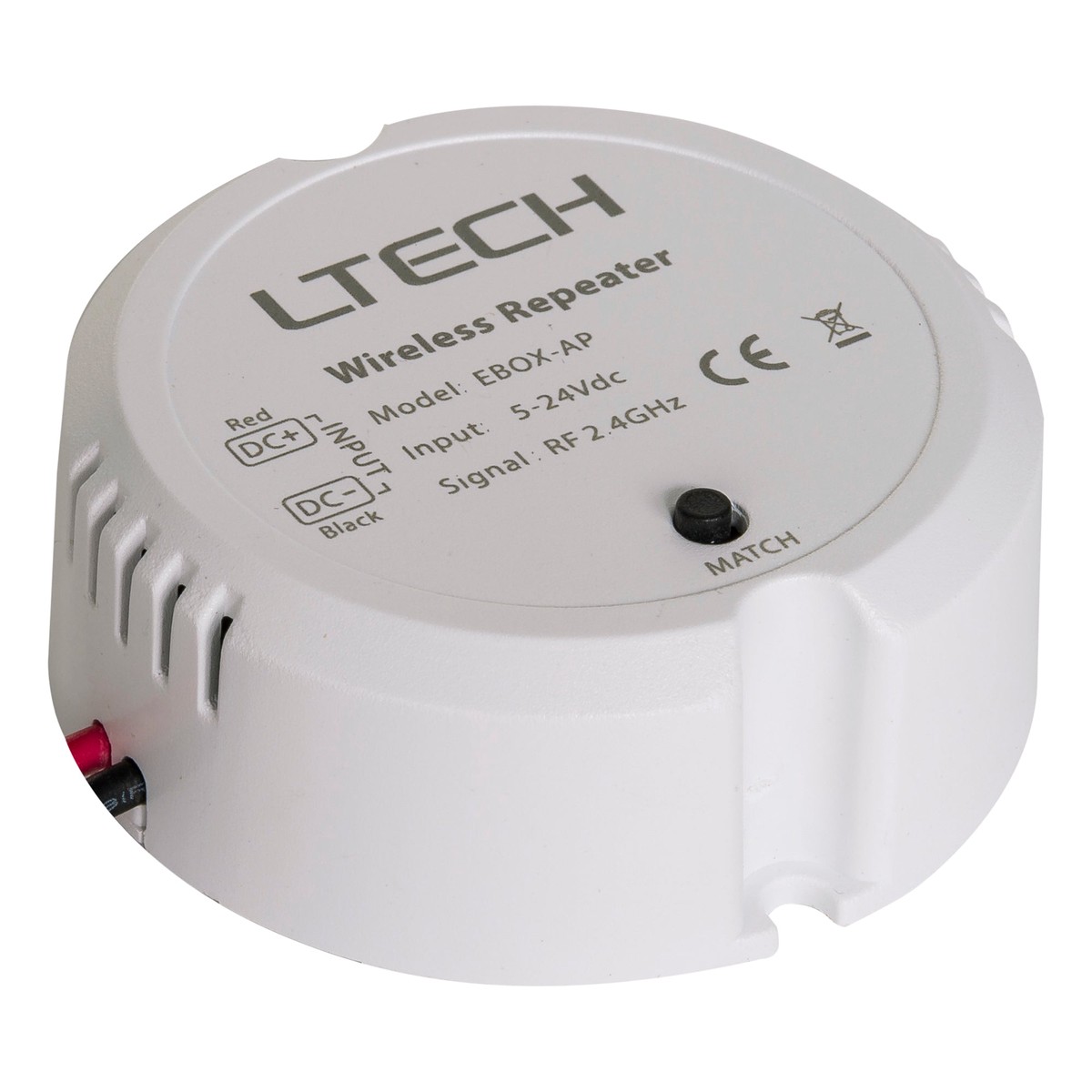
2.4ghz Wireless Signal Repeater
$59 $118 -50%
 -50%