
Your shopping cart is empty!
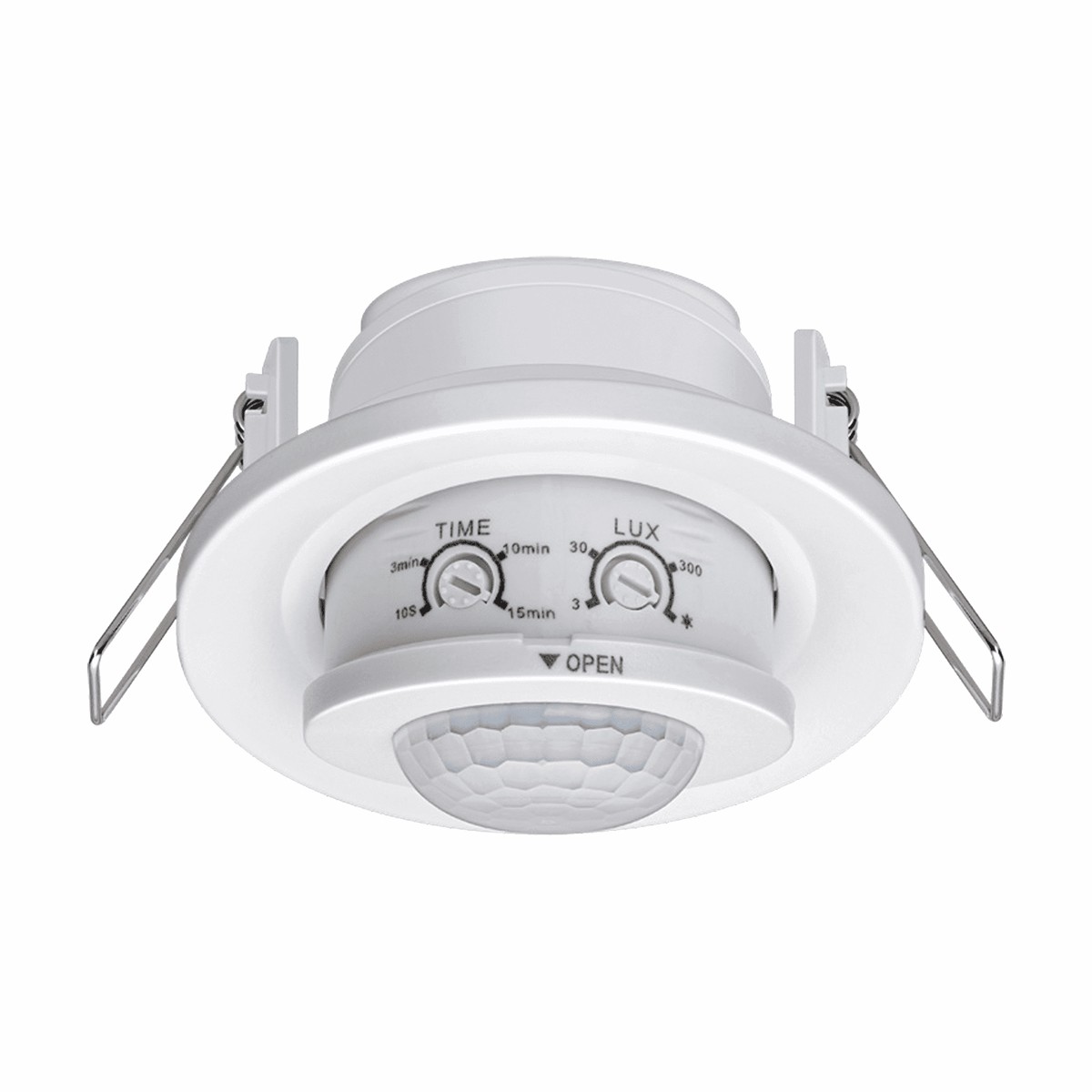
Domus Round Recessed PIR SENSOR 360
$32.792
$40.99
SKU: KO80391096066
Availability:
in Stock
The Domus SENSOR-REC-01 is a recessed 360 PIR occupancysensor 240V AC, 0.5W, switching up to300W of LED load, with a 12m detection radius and a30 adjustable tilt. Its record says…
The Domus SENSOR-REC-01 is a recessed 360 PIR occupancysensor 240V AC, 0.5W, switching up to300W of LED load, with a 12m detection radius and a30 adjustable tilt.
Its record says 300 W. The sensor draws half a watt.
- The datasheet publishes two wattages: 0.5W as the sensor’s own powerconsumption, and Rated Load: Max. 300W LED as the load it canswitch.
- The product’s power_watt field publishes 300W. That is the switching capacity, not the consumption. A 600-fold overstatement.
- THE TWO NUMBERS ANSWER DIFFERENT QUESTIONS.
- 0.5W is what the sensor costs to run about 4.4kWh ayear, running continuously.
- 300W is how much lighting it can control which at typicalLED loads is a great many fittings.
- WE CHECKED THE OTHER SENSORS. Of 26 sensor products, one publishes bothfigures on its sheet this one and its field took the rated load. So it is a single specific correction rather than a convention.
- It also publishes bulb_type = Built-in LED. A sensor hasno lamp. Four of the 26 carry that field.
300 W of switching capacity is the figure that decides the design
It is not a limitation so much as a budget. At 10W per downlight,300W is around thirty fittings; at 20W per batten it is fifteen. THE TRAP IS INRUSH, NOT STEADY LOAD. LED drivers draw a brief, very highcurrent at switch-on, and a relay rated for 300W of steady LED can still be damaged by thirtydrivers all starting at once. If the circuit is near the limit, stage it across twosensors or use a contactor. Tell us the fitting count and we will say whether it iscomfortable.
The numbers a designer actually needs
| Parameter | Value | What it decides |
|---|---|---|
| Detection range | 360 | No blind side suits a room centre |
| Detection distance | 12m max (below 24C) | Spacing and it shortens as the room warms |
| Mounting height | 2.24m | Whether it suits the ceiling |
| Time delay | 10sec to 15min | How long after the room empties |
| Ambient light threshold | <32000lux | Whether it triggers in daylight |
| Detection speed | 0.61.5m/s | Walking pace not a seated person |
- TWO OF THESE ARE ROUTINELY MISSED.
- THE 12m RANGE IS QUALIFIED below 24C. PIR works by detecting a temperature difference between a body and its background, so a warmroom reduces that contrast and the range falls. In an Australian summer ceiling space,plan on less than 12m.
- THE DETECTION SPEED RANGE IS WALKING PACE. PIR detects movement acrossits field, not presence. Someone sitting still at a desk can drop below the detectionthreshold and be switched off on them which is why the 15-minute maximum delayexists and why offices set it long.
Recessed, tilting, and why that combination is unusual
Most 360 sensors sit flush and look straight down. This one recesses likea small downlight and its eyeball tilts through 30 so it can be aimed along acorridor, at a doorway, or away from a heat source that would otherwise trigger it. Aiming away from an air-conditioning outlet, a heater or a west-facing window is the single mosteffective fix for nuisance triggering, and a fixed sensor cannot do it. An optional lens curtain masks part of the field for the same purpose.
Manual override
The sheet notes automatic-only and automatic-with-manual-override versions. Override matters in rooms where people need the light to stay on or stay off regardless a meeting room with a projector, a store room being stocktaked. Without it, theonly way to defeat a sensor is to wave at it. Tell us which behaviour you want and wewill confirm the version.
What is published
| Specification | Value |
|---|---|
| power_watt field | Publishes 300W the sensor draws 0.5W |
| What 300W actually is | The LED load it can SWITCH |
| Own consumption | 0.5W about 4.4kWh a year |
| Detection | 360 12m max qualified below 24C |
| Mounting height | 2.24m |
| Time delay | 10sec 15min |
| Ambient threshold | <32000lux, adjustable |
| Tilt | 30 eyeball aim away from heat sources |
| Supply / IP | 240V AC IP20 indoor only |
| Warranty | 5 years |
| bulb_type field | Publishes “Built-in LED” a sensor has no lamp |
Where it works
- Room centres 360 has no blind side.
- Corridors and doorways tilt to aim along them.
- Where nuisance triggering is a risk tilt away from the heat source.
- Not for seated occupancy without a long delay PIR reads movement.
- Not outdoors IP20.
Specifying it
Recessed 360 PIR occupancy sensor. 240V AC, 0.5W consumption, 300W maximum LEDswitching load. 12m detection at up to 4m mounting height. 10sec15min delay,<32000lux adjustable threshold. 30 adjustable tilt, optional lens curtain, manual overrideversion available. IP20. 5-year warranty. ITS RECORD PUBLISHES 300 W AS THE SENSOR’S POWER. THE SENSOR DRAWS 0.5 W 300 W is the loadit can SWITCH, and the field took the switching capacity as the consumption. A 600-fold overstatement, andone specific correction rather than a convention: of 26 sensors, this is the only one whose sheet publishesboth figures. TWO SPECS ARE ROUTINELY MISSED: the 12 m range is qualified “below 24 C” because PIRneeds thermal contrast, and the detection speed range is walking pace a seated person can be switched offon.
Supplied and supported by Lights For You.
Questions
Does it really use 300 watts?
No it draws 0.5 W. The 300 W figure on its record is the load it can switch, not its own consumption, and the two answer different questions: 0.5 W is what the sensor costs to run, about 4.4 kWh a year running continuously; 300 W is how much lighting it can control. The field took the switching capacity as the consumption, a 600-fold overstatement.
Is that error everywhere?
No. Of 26 sensor products in the catalogue, one publishes both figures on its sheet this one and its field took the rated load. So it is a single specific correction rather than a convention. It does also publish bulb_type = “Built-in LED”, which a sensor has no business carrying; four of the 26 do that.
How many fittings can it control?
At 10 W per downlight, around thirty; at 20 W per batten, fifteen. But the trap is inrush rather than steady load LED drivers draw a brief, very high current at switch-on, and a relay rated for 300 W of steady LED can still be damaged by thirty drivers all starting at once. If the circuit is near the limit, stage it across two sensors or use a contactor. Tell us the fitting count and we will say whether it is comfortable.
Will it really detect at 12 metres?
Below 24 degrees, yes. The range is explicitly qualified that way, because PIR works by detecting a temperature difference between a body and its background a warm room reduces that contrast and the range falls. In an Australian summer ceiling space, plan on less than 12 metres.
Will it switch off on someone sitting still?
It can. PIR detects movement across its field rather than presence, and the published detection speed range is walking pace 0.6 to 1.5 m/s. Someone sitting still at a desk can drop below the threshold. That is why the 15-minute maximum delay exists and why offices set it long.
Why does the tilt matter?
Because aiming away from a heat source is the single most effective fix for nuisance triggering, and a fixed sensor cannot do it. Most 360 degree sensors sit flush and look straight down; this one recesses like a small downlight and its eyeball tilts through 30 degrees, so it can be aimed along a corridor, at a doorway, or away from an air-conditioning outlet, a heater or a west-facing window. An optional lens curtain masks part of the field for the same purpose.
What does manual override give me?
The ability to make the light stay on or stay off regardless which matters in a meeting room with a projector, or a store room being stocktaked. Without it, the only way to defeat a sensor is to wave at it. Automatic-only and automatic-with-override versions exist; tell us which behaviour you want and we will confirm the version.
Only logged in customers who have purchased this product may leave a review.
Shipping policy for our store
We offer fast and reliable shipping worldwide. All orders are carefully packaged and shipped within 1–3 business days after payment confirmation.
- Fast shipping within 1-3 business days
- Free shipping on orders over $40
- 30 days money back guarantee
- 24/7 online customer support
- Secure packaging & safe delivery
Standard shipping, expedited shipping and express delivery options are available at checkout. Delivery time depends on your destination country and local logistics.
Related Products
 -50%
 -50%
 -50%
 -50%